Cloud Computing Training In Hyderabad 100% Job Guarantee

  • Classes for Beginners and Experts.
  • Best MNC Interview Questions Answered.
  • Budget-friendly fees and a curriculum created by industry experts.
  • Presented by a certified expert in cloud computing with over nine years of experience, Cloud Computing Trainer.
  • This week will mark the start of the next cloud computing training batch; register now!

Explore the factors that draw more than 25,000 students to ACTE.

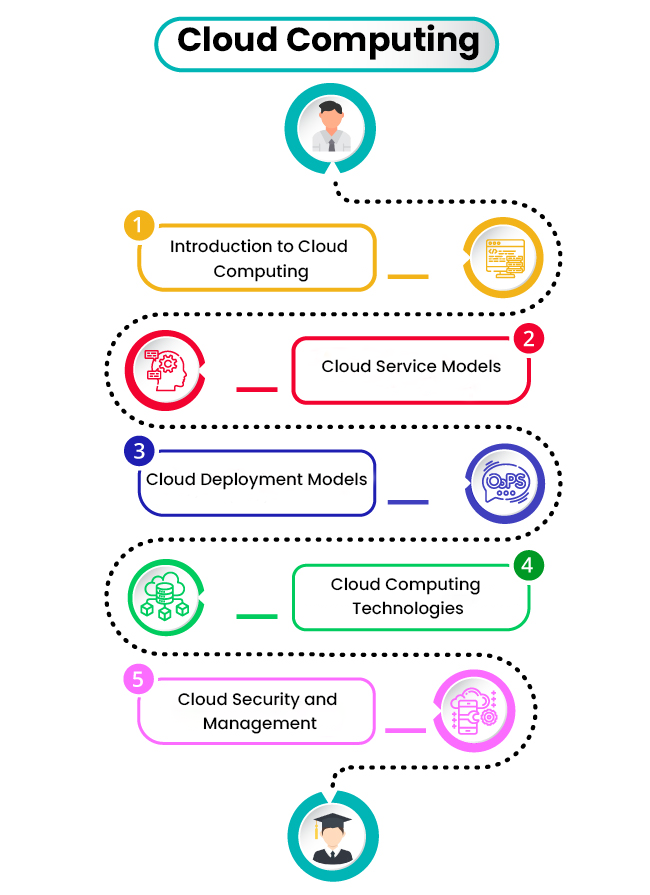
Curriculum in Cloud Computing

Linux Fundamentals
  • Automating Programs
  • Login Options
  • Key Filesystem Locations
  • BASH – Borne Again Shell
  • User Management
  • The /proc Pseudo Filesystem
  • Software Management
  • Hardware Management
  • Network Management
  • The X Window System
  • Building a Custom Linux Kernel
  • Kernel Versions
  • Kernel Source Files
  • Kernel Patch Files
  • Kernel Configuration
  • Kernel Building
  • Testing a New Kernel
  • The GNU/Linux Filesystem
  • Partition Types
  • Filesystem Types
  • Mounting
  • Automount
  • File Types
  • File Security
  • AWS (Amazon Web Services)
  • Introduction to AWS
  • EC2
  • Storage
  • Route 53
  • Cloud Front/Content Delivery Network
  • IAM
  • Relational Database Service
  • Monitoring (Cloud Trail & Cloud Watch)
  • Application Services
  • Design and Architecture
  • Virtual Private Cloud
  • VPC
  • Subnets
  • Route Tables
  • Internet gateway
  • Load Balancing and Autoscaling
  • Classic Load balancer
  • Application Load balancer
  • Network Load balancer
  • DynamoDB
  • Scaling through performance
  • Server less environment
  • Microservices
  • Introduction to DevOps
  • DevOps Principles in detail
  • DevOps Engineer Skills in the market
  • Knowing DevOps Delivery Pipeline
  • The market trend of DevOps
  • DevOps Technical Challenges
  • Tools we use in DevOps
  • DevOps on Cloud
  • Essentials of Cloud computing?
  • Cloud and virtualization architecture
  • Cloud deployment architecture
  • Cloud providers – An overview
  • Why we need DevOps on Cloud?
  • Introducing to Amazon web services
  • Jenkins – Continuous integration
  • Essentials of Continuous Integration
  • An example scenario where CI is used
  • Know about Jenkins and its architecture in detail
  • Jenkins tool Management in detail
  • Know about User management in Jenkins
  • Adding a slave node to Jenkins
  • Building Delivery Pipeline
  • Notification settings in Jenkins
  • Plugin management in Jenkins
  • Docker – A containerization technology
  • Introduction
  • Working with container
  • Introduction to Docker Networking
  • Docker Swarm – An introduction
  • Kubernetes
  • Introduction to Kubernetes
  • Kubernetes Cluster Architecture – An overview
  • Understanding concepts of Pods, Replica sets, deployments and namespaces
  • Understanding the concepts of services and networking
  • Persistent volumes and persistent volume claims – an overview
  • Design of Pods
  • Microsoft Azure
  • Introduction to Cloud Computing
  • Introduction to Azure
  • Configuration Management, Automation, and Debugging
  • Commands
  • Networking in Azure
  • Scaling in Azure
  • Monitoring in Azure
  • High Availability
  • Azure AD
  • Azure Service Bus Messaging
  • Azure Key Vaults
  • Web & Mobile Services
  • Azure VMs and Storage Accounts
  • VM Architecture
  • Deploy VMs
  • Create Storage Accounts for VMs
  • Create a VM with Unmanaged Storage
  • Manage VM Disks
  • Configure Shared Storage
  • Clean Up
  • Supported Workloads
  • Create a VM and Storage Account in Azure
  • Azure CLI
  • Azure PowerShell
  • Azure Cloud Shell
  • VM Agent and Extensions
  • ARM Templates
  • PowerShell DSC
  • Deploy and Enable Debugging for VM in Dev
  • Terraform Modules
  • Introduction to Modules
  • Module repositories
  • First Basic Module
  • The Module codes
  • Main Terraform Code
  • Using git repositories to save modules
  • Terraform With AWS
  • Setting up the system for AWS
  • AWS Storage: The S3 Bucket and Random ID
  • AWS Storage: The Root Module
  • AWS Compute: AMI Data, Key Pair, and the File Function
  • AWS Compute: The EC2 Instance
  • AWS Compute: User Data and Template Files
  • AWS Compute: The Root Module
  • AWS Networking: VPC, IGW, and Route Tables
  • AWS Networking: Subnets, Security, and the Count Attribute
  • AWS Networking: The Root Module

  • Curriculum in Cloud Computing

    Cloud Computing Is Preferred by Over 35% of Developers. Cloud Computing is the most widely used and in-demand programming language in the IT industry.

    • Automating Programs
    • Login Options
    • Key Filesystem Locations
    • BASH – Borne Again Shell
    • User Management
    • The /proc Pseudo Filesystem
    • Software Management
    • Hardware Management
    • Network Management
    • The X Window System
    • Kernel Versions
    • Kernel Source Files
    • Kernel Patch Files
    • Kernel Configuration
    • Kernel Building
    • Testing a New Kernel
    • Partition Types
    • Filesystem Types
    • Mounting
    • Automount
    • File Types
    • File Security
    • Introduction to AWS
    • EC2
    • Storage
    • Route 53
    • Cloud Front/Content Delivery Network
    • IAM
    • Relational Database Service
    • Monitoring (Cloud Trail & Cloud Watch)
    • Application Services
    • Design and Architecture
    • VPC
    • Subnets
    • Route Tables
    • Internet gateway
    • Classic Load balancer
    • Application Load balancer
    • Network Load balancer
    • Scaling through performance
    • Server less environment
    • Microservices
    • DevOps Principles in detail
    • DevOps Engineer Skills in the market
    • Knowing DevOps Delivery Pipeline
    • The market trend of DevOps
    • DevOps Technical Challenges
    • Tools we use in DevOps
    • Essentials of Cloud computing?
    • Cloud and virtualization architecture
    • Cloud deployment architecture
    • Cloud providers – An overview
    • Why we need DevOps on Cloud?
    • Introducing to Amazon web services
    • Essentials of Continuous Integration
    • An example scenario where CI is used
    • Know about Jenkins and its architecture in detail
    • Jenkins tool Management in detail
    • Know about User management in Jenkins
    • Adding a slave node to Jenkins
    • Building Delivery Pipeline
    • Notification settings in Jenkins
    • Plugin management in Jenkins
    • Introduction
    • Working with container
    • Introduction to Docker Networking
    • Docker Swarm – An introduction
    • Introduction to Kubernetes
    • Kubernetes Cluster Architecture – An overview
    • Understanding concepts of Pods, Replica sets, deployments and namespaces
    • Understanding the concepts of services and networking
    • Persistent volumes and persistent volume claims – an overview
    • Design of Pods
    • Introduction to Cloud Computing
    • Introduction to Azure
    • Configuration Management, Automation, and Debugging
    • Commands
    • Networking in Azure
    • Scaling in Azure
    • Monitoring in Azure
    • High Availability
    • Azure AD
    • Azure Service Bus Messaging
    • Azure Key Vaults
    • Web & Mobile Services
    • VM Architecture
    • Deploy VMs
    • Create Storage Accounts for VMs
    • Create a VM with Unmanaged Storage
    • Manage VM Disks
    • Configure Shared Storage
    • Clean Up
    • Supported Workloads
    • Azure CLI
    • Azure PowerShell
    • Azure Cloud Shell
    • VM Agent and Extensions
    • ARM Templates
    • PowerShell DSC
    • Deploy and Enable Debugging for VM in Dev
    • Introduction to Modules
    • Module repositories
    • First Basic Module
    • The Module codes
    • Main Terraform Code
    • Using git repositories to save modules
    • Setting up the system for AWS
    • AWS Storage: The S3 Bucket and Random ID
    • AWS Storage: The Root Module
    • AWS Compute: AMI Data, Key Pair, and the File Function
    • AWS Compute: The EC2 Instance
    • AWS Compute: User Data and Template Files
    • AWS Compute: The Root Module
    • AWS Networking: VPC, IGW, and Route Tables
    • AWS Networking: Subnets, Security, and the Count Attribute
    • AWS Networking: The Root Module

    Cloud Computing Training Projects

    Develop Your Cloud Computing Skills With Useful and Interesting Projects.


    Simple Chat Application

    Build a basic chat application using AWS DynamoDB for storage and AWS Lambda for real-time updates.


    Cloud-Based Task Scheduler

    Develop a simple task scheduling application using AWS CloudWatch Events and AWS Lambda.


    Basic Data Analytics Pipeline

    Create a basic data analytics pipeline using AWS Glue for ETL and Amazon Redshift for data warehousing.


    Data Streaming and Analytics

    Build a data streaming and analytics platform using Apache Kafka, Apache Spark, and cloud-based storage solutions.


    Machine Learning Model Deployment

    Deploy machine learning models using cloud-based services like AWS SageMaker or Google AI Platform.


    Serverless GraphQL API

    Create a serverless GraphQL API using AWS AppSync and AWS Lambda.


    Serverless Real-Time Chat Application

    Develop a serverless real-time chat application using AWS WebSocket API, AWS Lambda, and AWS DynamoDB Streams.


    AI-Driven Personalization Platform

    Build an AI-driven personalization platform for delivering personalized content and recommendations using cloud-based AI services.


    Serverless Data Warehousing Solution

    Design and implement a serverless data warehousing solution using services like AWS Athena, AWS Glue, and Amazon Redshift Spectrum.

    Key Highlights

    Our Instructor

    Get advice from specialists who have certifications and are currently working.

    Cloud Computing Training Overview

    Cloud computing is a revolutionary technology that has transformed the way businesses and individuals access, store, and manage data, applications, and services. At its core, cloud computing provides on-demand access to a shared pool of computing resources, including servers, storage, networking, and software, delivered over the internet. This paradigm shift enables organizations to scale resources dynamically, pay only for what they use, and offload the burden of infrastructure management to cloud providers. With cloud computing, users can access their data and applications from anywhere with an internet connection, enabling greater flexibility, agility, and collaboration.

    Additional Information

    Reasons for Choosing Cloud Computing Course

    • Cloud computing provides on-demand access to virtualized computing resources such as servers, storage, and networking infrastructure. Organizations can leverage IaaS to provision and scale infrastructure dynamically, reducing the need for upfront hardware investment and enabling flexible and cost-effective resource allocation.
    • PaaS offerings provide development and deployment environments for building, testing, and deploying applications without the complexity of managing underlying infrastructure. Developers can leverage PaaS platforms to streamline application development, improve collaboration, and accelerate time-to-market for new software products and services.
    • SaaS delivers software applications over the internet on a subscription basis, eliminating the need for organizations to install, maintain, and update software locally. SaaS offerings span a wide range of applications, including productivity tools, collaboration software, customer relationship management (CRM) systems, enterprise resource planning (ERP) solutions, and more.
    • Cloud computing provides scalable and cost-effective infrastructure for processing, analyzing, and visualizing large volumes of data. Organizations can leverage cloud-based big data platforms and analytics tools to derive insights, make data-driven decisions, and uncover patterns and trends from vast datasets.
    • Cloud computing plays a crucial role in supporting IoT deployments by providing scalable and resilient infrastructure for collecting, storing, and analyzing data from connected devices. Cloud-based IoT platforms enable real-time monitoring, predictive maintenance, and automation of IoT-enabled systems and services.

    Why Cloud Computing Certification Course from PLACEMENT7?

    The Cloud Computing Certification Course from PLACEMENT7 offers several compelling reasons for individuals looking to enhance their skills and advance their careers in cloud computing:

    • PLACEMENT7's Cloud Computing Certification Course covers a comprehensive curriculum that provides in-depth knowledge and hands-on experience in various aspects of cloud computing, including cloud infrastructure, platform services, deployment models, security, and best practices. The course is designed to equip participants with the skills and expertise needed to succeed in the rapidly evolving field of cloud computing.
    • The course is taught by experienced instructors who are industry experts with extensive knowledge and expertise in cloud computing. The instructors provide personalized guidance, mentorship, and support to help participants master complex concepts, overcome challenges, and achieve their learning objectives.
    • The course emphasizes hands-on learning with practical exercises, labs, and real-world projects that simulate industry scenarios and challenges. Participants have the opportunity to work with leading cloud platforms such as Amazon Web Services (AWS), Microsoft Azure, and Google Cloud Platform (GCP), gaining practical experience in cloud infrastructure deployment, configuration, and management.
    • The course prepares participants for industry-recognized certifications in cloud computing, such as AWS Certified Solutions Architect, Microsoft Certified Azure Administrator, Google Cloud Certified Professional Cloud Architect, and CompTIA Cloud+. Participants receive guidance, practice exams, and study materials to help them prepare for certification exams and validate their skills and expertise in cloud computing.

    Updated and Specialized Cloud Computing Components:

    As of my last update, several updated and specialized components have emerged in the field of cloud computing, reflecting the evolving needs and advancements in technology. Here are some of the updated and specialized cloud computing components:

    • Serverless computing, also known as Function as a Service (FaaS), has gained significant popularity for its ability to enable developers to run code without provisioning or managing servers.
    • Containers have become a key technology in cloud computing for packaging and deploying applications in a lightweight and portable manner. Kubernetes, an open-source container orchestration platform, has emerged as the de facto standard for managing containerized applications at scale.
    • Edge computing brings computation and data storage closer to the location where it is needed, enabling real-time processing and low-latency interactions for edge devices and applications.
    • Cloud providers offer a wide range of AI and machine learning services that enable organizations to build and deploy AI-powered applications and solutions without requiring expertise in machine learning algorithms and infrastructure.

    Cloud Computing 's Future Scope:

    The future scope of cloud computing is incredibly promising, driven by several key trends and developments that are reshaping the industry. Here are some aspects that highlight the vast potential of cloud computing in the years to come:

    • Cloud computing is becoming increasingly pervasive across industries, from healthcare and finance to manufacturing and retail. Organizations of all sizes are recognizing the benefits of cloud-based solutions in terms of scalability, flexibility, and cost-efficiency.
    • Edge computing is emerging as a critical complement to traditional cloud infrastructure, especially for applications that require low-latency data processing and real-time decision-making.
    • Organizations are increasingly adopting hybrid and multi-cloud strategies to leverage the strengths of different cloud providers and on-premises infrastructure. This trend is driving the development of tools and platforms that facilitate seamless integration, management, and orchestration of workloads across heterogeneous cloud environments.
    • Security and compliance remain top priorities for organizations migrating to the cloud. Cloud providers are continuously enhancing their security capabilities and investing in technologies such as encryption, identity and access management (IAM), and threat detection to protect data and workloads in the cloud.
    Show More

    Enter details. Get MNC calls!

    Cloud Computing Training Objectives

    Prerequisites for Cloud Computing certification programs vary depending on the specific certification and the level of expertise it targets. However, common prerequisites may include a foundational understanding of computer science, networking, and operating systems, along with specific knowledge of cloud computing concepts, platforms, and services. Some certifications may also require prior work experience in IT or completion of related training courses.

    Having a Cloud Computing certification is important for several reasons. It validates your expertise and skills in cloud technologies, making you more marketable to employers seeking professionals with cloud computing knowledge. Certification can also enhance your credibility and confidence in your abilities, leading to better job opportunities, higher earning potential, and career advancement in the rapidly growing field of cloud computing.

  • Cloud architect
  • Cloud engineer
  • Cloud administrator
  • DevOps engineer
  • Cloud security specialist
  • Cloud Computing certifications can benefit career advancement by demonstrating your expertise and proficiency in cloud technologies to employers and peers. Certification can open doors to new job opportunities, promotions, salary increases, and leadership roles within organizations. Additionally, staying updated with the latest cloud computing trends and best practices through certification renewal and continuing education can help you remain competitive in the job market and advance your career over time.

    Some popular Cloud Computing certification programs include AWS Certified Solutions Architect, Microsoft Certified: Azure Administrator Associate, Google Cloud Certified Professional Cloud Architect, CompTIA Cloud+, Certified Cloud Security Professional (CCSP), and Certified Kubernetes Administrator (CKA). These certifications are offered by reputable organizations and are recognized by industry professionals worldwide.

    Cloud Computing certifications can be categorized based on the cloud platform (e.g., AWS, Azure, Google Cloud), the level of expertise (e.g., entry-level, associate, professional, expert), and specialization areas (e.g., cloud architecture, cloud security, DevOps). Additionally, certifications may focus on specific cloud services or deployment models (e.g., IaaS, PaaS, SaaS) and may target different roles within IT, such as administrators, architects, developers, and security professionals.

    Show More

    Industry Statistics

    Jobs / Month

    248

    Avg. Salary

    ₹ 12,55,200

    Job Roles

    Cloud Support Engineer

    Cloud Solutions Architect

    Systems Administrator

    DevOps Engineer

    Cloud Computing Certification

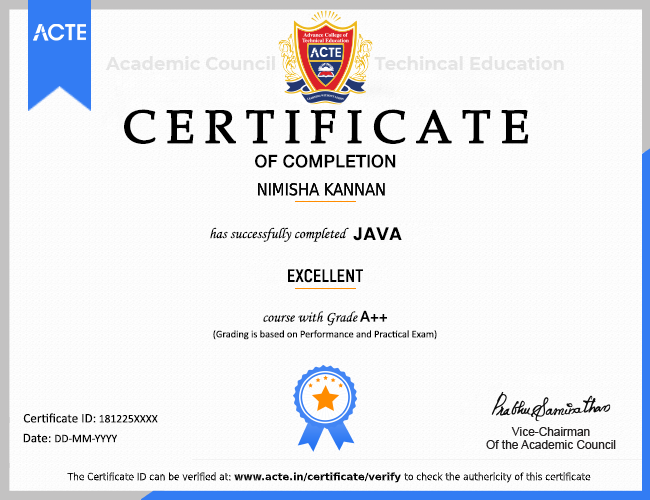
    Certificate
    GET A SAMPLE CERTIFICATE

    Pursuing a Cloud Computing certification can be rational for several reasons. It validates your expertise and proficiency in cloud technologies, making you more competitive in the job market. Certification can lead to better job opportunities, higher earning potential, and career advancement. It also demonstrates your commitment to continuous learning and professional development in a rapidly evolving field.

    While real-world experience can be beneficial for preparing for a Cloud Computing certification exam, it is not always a requirement. Many certification programs provide comprehensive training materials and resources to help candidates prepare for the exam, regardless of their level of experience. However, hands-on experience with cloud platforms and services can enhance your understanding of key concepts and make it easier to grasp complex topics covered in the exam.

    Obtaining a Cloud Computing certification does not guarantee employment, but it can significantly improve your chances of finding a job in the field. Certification enhances your resume, demonstrates your proficiency in cloud technologies to employers, and makes you more competitive in the job market. However, securing employment ultimately depends on various factors such as job availability, your skills and experience, and how well you perform in interviews.

    Specific requirements prior to taking Cloud Computing certification exams vary depending on the certification program and the level of expertise it targets. Some certifications may require candidates to have a foundational understanding of computer science, networking, and operating systems, while others may have specific prerequisites such as work experience or completion of related training courses.

    The procedure for preparing for a Cloud Computing certification exam typically involves reviewing the exam objectives provided by the certification provider, studying relevant study materials such as official documentation, online courses, practice exams, and hands-on labs, and gaining practical experience with cloud platforms and services through projects or work experience.

    Yes, many Cloud Computing certification exams offer an online version that allows candidates to take the exam remotely from their own homes or offices. Online proctored exams are often available, where candidates are monitored remotely to ensure exam integrity.

    While practical experience can enhance your understanding of cloud technologies and make it easier to prepare for a Cloud Computing certification exam, it is not always necessary to obtain certification. Many certification programs provide comprehensive training materials and resources to help candidates prepare for the exam, regardless of their level of experience.

    Whether the investment of time and money in an PLACEMENT7 Cloud Computing Certification is justified depends on your career goals, the specific certification program offered by PLACEMENT7, and its alignment with your interests and aspirations. It's essential to research the certification program, review the curriculum, consider the reputation of the certification provider, and assess the demand for certified professionals in the job market before making a decision.

    Show More

    The Preferred Partner for 100+ Organizations' Hiring

    Learn from the certified and real time working professionals.

    • Over 100 firms that are looking for top talent for their open positions have come to rely on PLACEMENT7 as their go-to partner.

    • Businesses have confidence in our ability to match them with the best individuals because of our considerable expertise and proven track record of success.

    • In this section, we'll examine the primary elements influencing this trust and examine how our constant commitment to excellence regularly results in remarkable results for our clients.

    Corporate Clients

    Cloud Computing Course Duration and Fees

    Level Course Duration Fees Structure
    Basic 1 - 1.5 Months ₹7,000 - ₹9,000
    Advanced 1.5 - 2 Months ₹7,000 - ₹10,000

    Job Opportunities in Cloud Computing

    Cloud Computing is preferred by more than 35% of developers. The most widely used and in-demand programming language in the tech industry is Cloud Computing.

    Salary In Cloud Computing
    Reach Our Placement Officer

    You can Work as a

    Cloud Operations ManagerCloud Data EngineerCloud ConsultantCloud Software EngineerCloud Project ManagerCloud Compliance AnalystCloud Sales Engineer

    Upcoming In-Demand Jobs

    Cloud Business AnalystCloud Product ManagerCloud Training SpecialistCloud Account ManagerSolutions Developer

    Student Testimonials

    100% Placement

    7000+ Placed Student

    600+ Hiring Partners

    5.5 LPA Average Salary

    Recently Placed Students

    Cloud Computing Training FAQ's

    Boost Your Coding Ability: Essential Cloud Computing Training for Novices and Experienced

  • Cloud Engineer
  • Cloud Solutions Architect
  • Cloud Administrator
  • DevOps Engineer
  • Cloud Security Specialist
  • Cloud Developer
  • Data Engineer
  • Machine Learning Engineer
  • Cloud Consultant
  • Cloud Operations Manager
  • Feature selection in Cloud Computing is important because it helps improve the performance and efficiency of cloud-based systems and applications. By selecting relevant features or attributes from large datasets, organizations can reduce computational overhead, optimize resource utilization, and enhance the accuracy and effectiveness of cloud-based solutions. Feature selection also helps mitigate the risk of overfitting, improve model interpretability, and simplify the implementation and maintenance of cloud-based models.

  • Security and compliance
  • Scalability and performance
  • Cost management
  • Integration and interoperability
  • Vendor lock-in
  • Skills gap
  • Cross-validation
  • Performance metrics
  • Hyperparameter tuning
  • Model selection
  • Bias and fairness
  • Robustness testing
  • Version control
  • Documentation
  • Containerization
  • Automation
  • Modularization
  • Testing
  • Monitoring and logging
  • Security and privacy concerns
  • Compliance and regulatory requirements
  • Performance and latency
  • Vendor lock-in
  • Cost management
  • Data management and governance
  • Skills gap
  • Show More
  • Set clear goals
  • Create a study schedule
  • Engage actively
  • Practice regularly
  • Seek support
  • Stay organized
  • Stay persistent
  • Flexibility
  • Accessibility
  • Cost-effectiveness
  • Variety of resources
  • Expert instructors
  • Convenience
  • Cost-effectiveness
  • Self-paced learning
  • Access to resources
  • Interactive learning
  • Curriculum
  • Instructor expertise
  • Format and delivery
  • Reviews and testimonials
  • Certification
  • OYes, online Cloud Computing training can be effective for beginners. Many online training programs offer introductory courses specifically designed for individuals with little to no prior experience in cloud computing. These courses typically cover fundamental concepts, terminology, and principles of cloud computing in an accessible and beginner-friendly manner. Additionally, online training allows beginners to learn at their own pace and access a variety of resources and support materials to aid in their learning journey.

    Yes, online Cloud Computing courses typically furnish participants with certificates upon course completion. These certificates serve as proof of completion and may indicate the topics covered, the duration of the course, and the skills acquired. Certificates from reputable training providers can enhance your credibility and marketability in the job market and may be required by employers or organizations as evidence of your training and expertise in cloud computing.

    Show More

    Corporate Cloud Computing training refers to specialized training programs designed for employees of businesses to learn about cloud computing technologies, platforms, and services. These programs are tailored to the specific needs and objectives of the organization, aiming to enhance the workforce's skills and knowledge in leveraging cloud computing for various business applications.

  • Improved efficiency and productivity
  • Cost savings
  • Enhanced innovation
  • Scalability and agility
  • Security and compliance
  • It facilitates digital transformation
  • It fosters competitiveness
  • It maximizes ROI on cloud investments
  • It mitigates risks
  • Introductory courses
  • Platform-specific training
  • Specialized training
  • Certification preparation
  • In-person workshops or seminars conducted onsite or at training facilities.
  • Virtual instructor-led training (VILT) via web conferencing platforms, allowing remote participation from multiple locations.
  • Self-paced online courses or e-learning modules accessible through learning management systems (LMS).
  • Blended learning approaches combining online modules with in-person or virtual instructor-led sessions for a comprehensive learning experience.
  • Provisioning and managing cloud resources
  • Deploying applications
  • Implementing security measures
  • Troubleshooting and optimization
  • Real-world projects
  • Show More